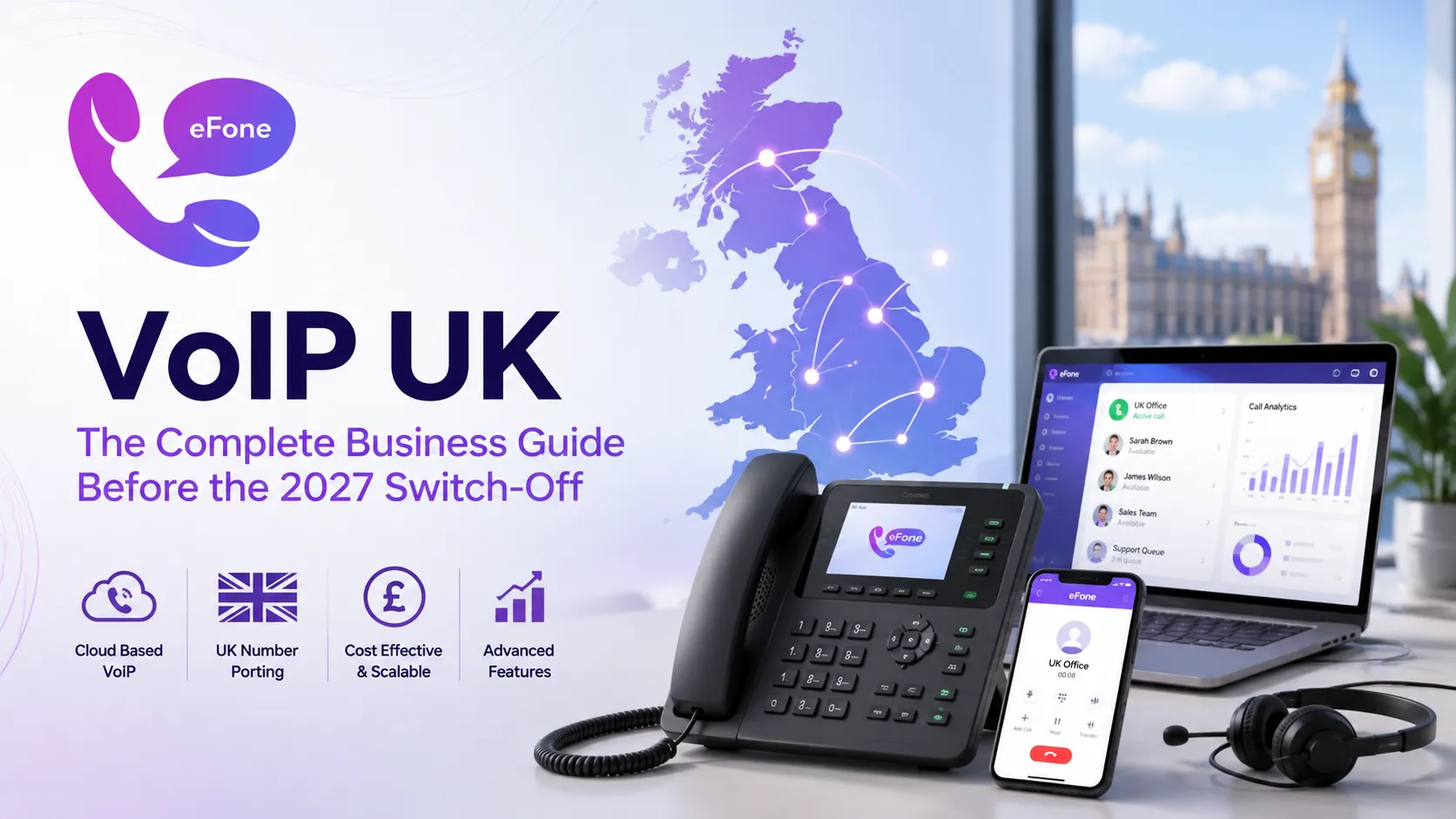
VoIP UK: The Complete Business Guide Before the 2027 Switch-Off
VoIP UK guide for 2026: pricing, the PSTN switch-off deadline, and how to move your business phone system before January 2027.
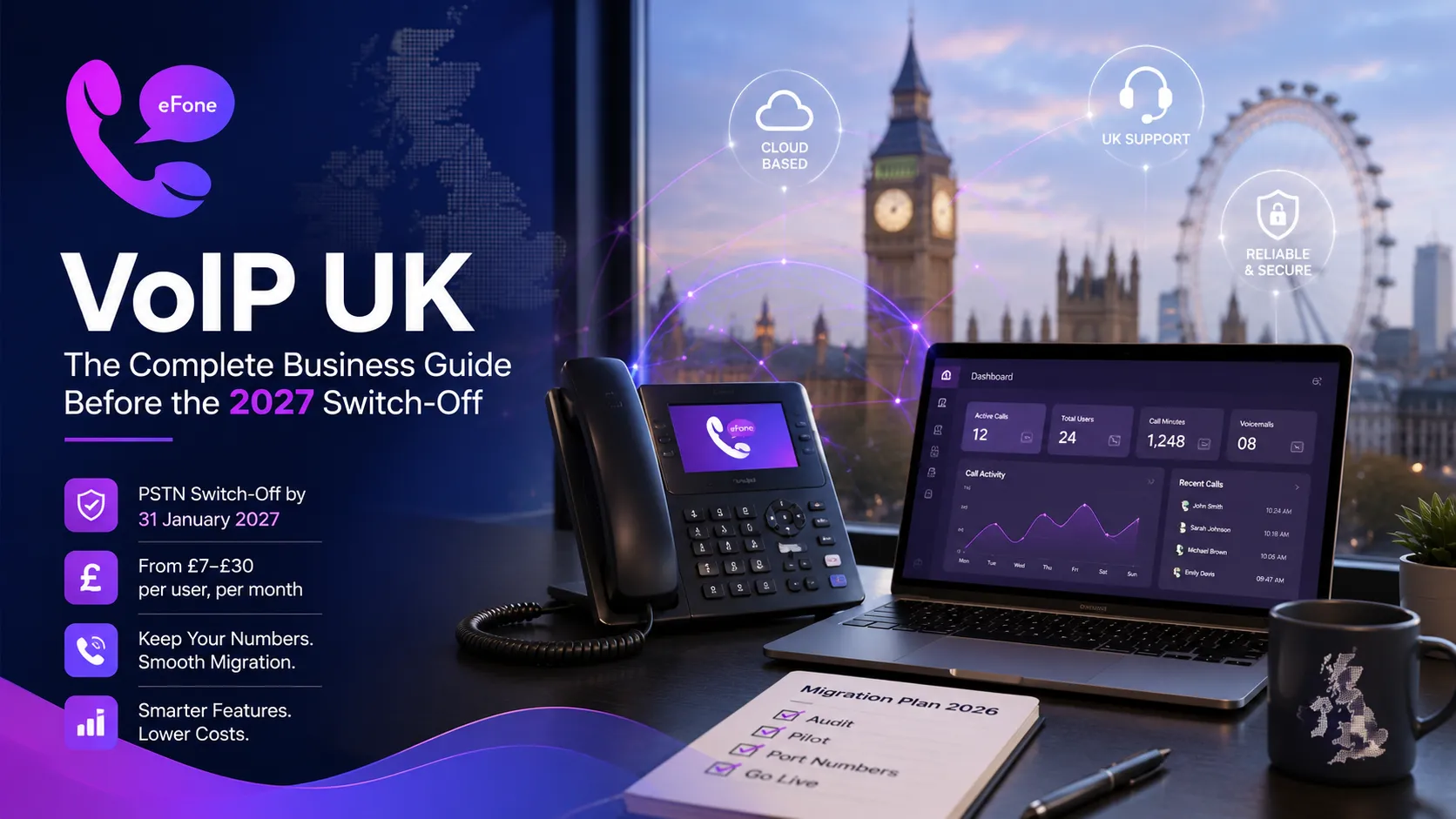
VoIP in the UK typically costs £7 to £30 per user, per month, with most small businesses landing around £10 to £20/user for a feature-complete plan. The switch matters more than usual right now: Openreach is retiring the UK's entire analogue PSTN network by 31 January 2027, meaning every business still on a traditional landline needs a migration plan this year. Here is what UK businesses need to know about pricing, the switch-off timeline, and choosing a system that will not need replacing again in 2030.
Why VoIP UK Searches Have Spiked: The PSTN Switch-Off
Openreach stopped selling new PSTN and ISDN lines back in September 2023, and the full national switch-off completes by January 2027. The original deadline was actually December 2025, but it was pushed back after pressure from charities and telecare providers concerned about vulnerable customers on legacy lines. For businesses, the practical effect is the same: any analogue or ISDN-based phone line will stop working, and the safe window to migrate calmly, rather than in a Q4 2026 rush, is closing.
Ofcom has been explicit that the deadline is fixed and that providers are expected to have migrated the vast majority of customers well before January 2027. Businesses that treat 2026 as planning time, rather than panic time, consistently end up with cheaper, more capable systems than those who wait.
How Much Does VoIP Cost in the UK?
| Plan Tier | Typical Cost | Best For |
|---|---|---|
| Entry-level | £7-£12/user/month | Microbusinesses, 1-5 users |
| Mid-tier (most common) | £10-£20/user/month | SMEs, 5-30 users, desk-phone integration |
| Enterprise/AI-enabled | £20-£35/user/month | Larger teams needing analytics, CRM sync |
| Contact centre add-on | £30+/agent/month | Support teams with queue and supervisor tools |
A typical 10-user team lands at £100 to £250/month total, depending on plan tier and whether hardware is required. As with US pricing, the advertised rate is rarely the full picture, hardware alone can account for roughly half of year-one spend for teams that need desk phones, at £40 to £200 per handset.
What Adds to the Advertised Price
- Number porting: often free on annual contracts, but £10 to £25 per number on rolling monthly plans
- Hardware: desk phones range £40 to £200 each if you do not go softphone-only
- Contact centre features: queue analytics, supervisor tools, and outbound dialling typically push cost above £30/user
- Taxes and standard fees: build in some headroom above the advertised per-user rate
Once these are added, real UK business bills tend to land 30 to 60% higher than the advertised entry price, not because of hidden dishonesty, but because entry-tier prices rarely include everything a working business phone system needs.
Can You Keep Your Existing Number?
Yes. UK number portability rules require providers to support porting of geographic, non-geographic, and mobile numbers from your existing provider. The process typically takes 7 to 15 working days, and your customers will not notice any difference, no reprinted stationery or website updates required.
VoIP vs. Landline in the UK: Why the Comparison Has Changed
This used to be a closer call. In 2026, it is not. With PSTN lines being retired region by region, any new landline spend risks double-paying, once for a soon-to-be-obsolete line, and again for the VoIP migration you will need anyway before 2027. Beyond compliance, VoIP UK plans typically bundle unlimited domestic minutes and far cheaper international rates than legacy landline billing, plus features like auto-attendant and mobile apps that used to require separate paid add-ons.
What to Look for When Choosing a UK VoIP Provider
- Contract flexibility, rolling monthly plans avoid the multi-year lock-in that has trapped many UK SMEs in contracts they outgrew
- Confirmed porting timeline in writing, do not assume; get the process and dates confirmed before signing
- Bandwidth requirements: a single VoIP call uses roughly 100 Kbps, so most standard fibre connections handle several concurrent calls comfortably
- UK-based support is especially important for businesses without in-house IT
- A short pilot, test with one team or site for four to six weeks before a full rollout
A Simple Migration Plan for 2026
- Audit your current lines and devices, including anything that quietly uses a phone line, like alarm systems or card machines
- Shortlist two or three providers and get live demos, not just quotes
- Run a pilot with one team or location for 4 to 6 weeks
- Confirm number porting timelines in writing before signing
- Roll out fully with time to spare before the January 2027 deadline
Businesses that follow this kind of timeline cross into 2027 with no disruption and a system that is genuinely better than what they had. Those that leave it until the last quarter of 2026 will take whatever capacity providers have left.
Where eFone Fits for UK Businesses
eFone's cloud VoIP plans give UK businesses a straightforward, per-user price with no separate hardware purchase required to get started, plus free number porting handled as part of onboarding. You can see current plan pricing on the pricing page.
If you are comparing overall costs before you switch, our guide to business phone system cost breaks down pricing by team size, and our comparison of VoIP vs. landline digs into the savings math in more detail.
Frequently Asked Questions
How much does VoIP cost for a business in the UK?+
Most UK businesses pay £10 to £20 per user, per month for a feature-complete VoIP plan. Entry-level plans start around £7/user, while enterprise and contact-centre tiers run £20 to £35+/user.
When is the UK PSTN switch-off happening?+
Openreach will complete the full switch-off of the UK's analogue PSTN and ISDN network by 31 January 2027, with phased migrations continuing through 2026.
Can I keep my existing business phone number when switching to VoIP?+
Yes. UK number portability rules require your new provider to port geographic, non-geographic, and mobile numbers, typically within 7 to 15 working days.
Do I need fibre broadband to use VoIP?+
Fibre is not strictly required, a single call uses around 100 Kbps, so most standard broadband connections handle it well. Fibre is recommended for larger teams making many simultaneous calls.
Is VoIP mandatory for UK businesses?+
Not by law directly, but any business still using an analogue or ISDN landline will lose that service when the PSTN switch-off completes in January 2027, making a move to VoIP effectively unavoidable.
The Bottom Line
With the UK's PSTN switch-off deadline now fixed at January 2027, VoIP has moved from optional upgrade to operational necessity for every UK business still on a legacy landline. Planning the move in 2026, rather than rushing it at the deadline, is what separates a smooth transition from a scramble. Compare eFone's UK VoIP plans on the pricing page to see what a modern system would cost your team.
Ready to get your number?
Set up a business phone and help desk on one account, or grab a personal line to call home — usually in minutes.
Get started