Is VoIP Cheaper Than a Landline? The 2026 Cost Comparison
Is VoIP cheaper than landline for your business? Compare real 2026 pricing, hidden fees, and savings, then see eFone's transparent VoIP plans.
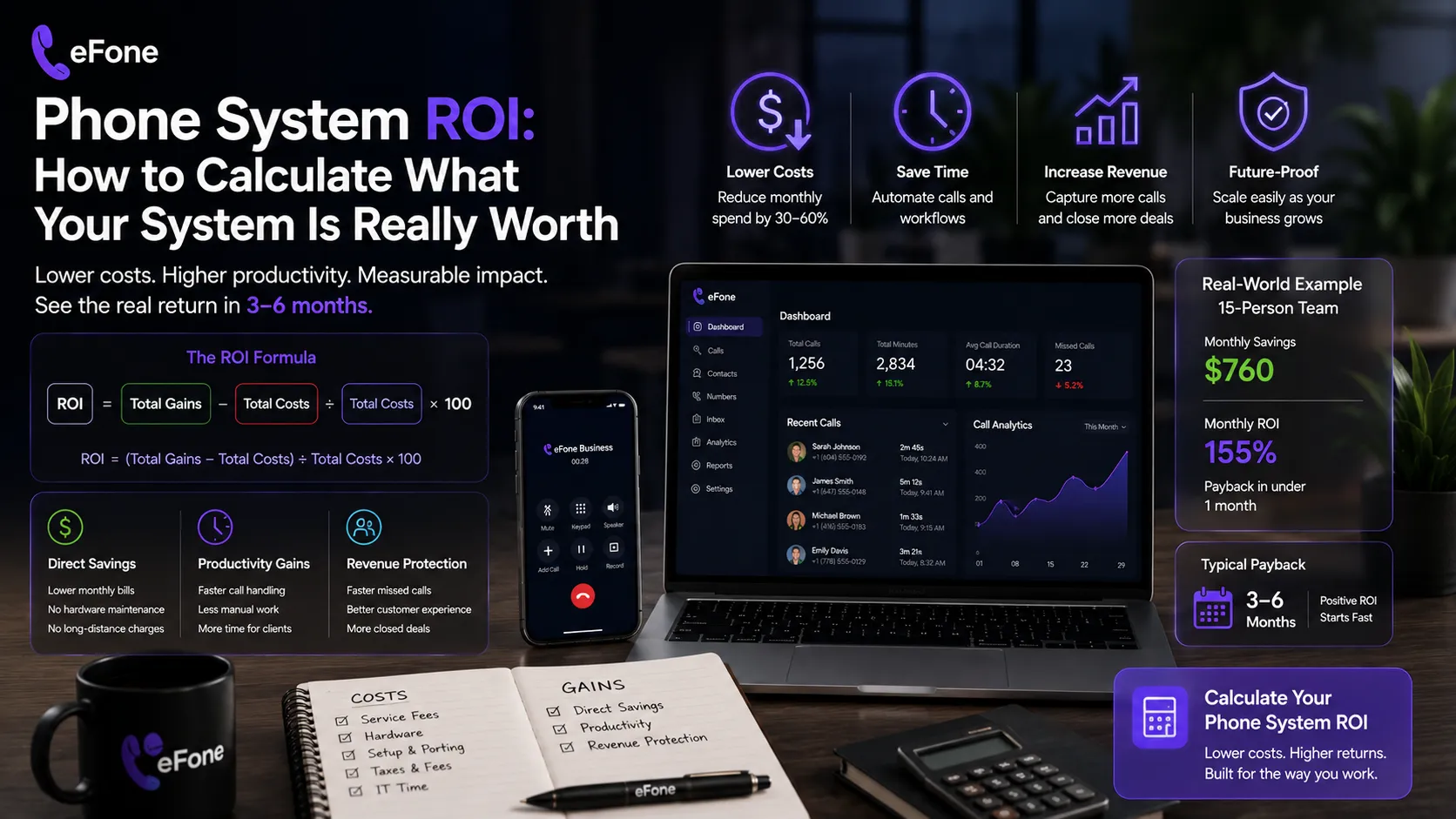
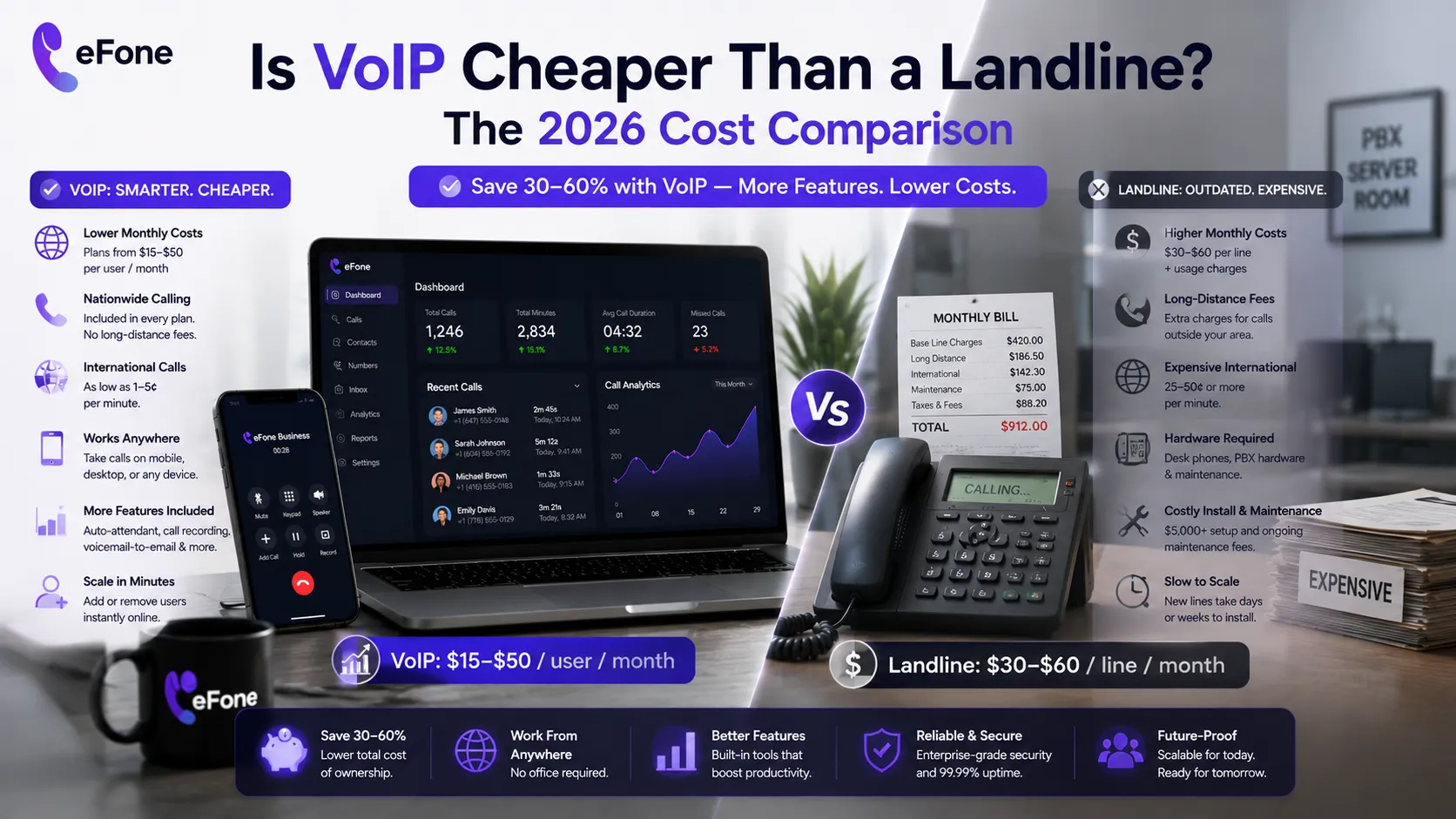
Yes, for the large majority of businesses, VoIP is cheaper than landline service, typically cutting monthly communication costs by 30 to 60% once setup, hardware, and long-distance charges are factored in. The gap has only grown wider in 2026 as carriers wind down legacy copper infrastructure. Here is exactly where the savings come from, where landlines still hold an edge, and how to run the numbers for your own team.
Quick Cost Comparison: VoIP vs. Landline
| Cost Factor | VoIP | Landline |
|---|---|---|
| Setup/installation | $0-$1,000 (softphone-friendly) | $5,000-$15,000 for a 20-person office |
| Monthly cost (per line) | $15-$50/user | Flat per-line fee, often $30-$60/line |
| Long-distance calling | Usually included nationwide | Charged per minute in many plans |
| International calling | 1-5 cents/minute | 25-50 cents/minute or more |
| Hardware | Optional, softphones on existing devices | Dedicated desk phones required |
| Scaling up | Add a user in minutes, no technician | New line install, often needs a technician |
Why VoIP Costs Less: The Core Reasons
The savings are not a marketing gimmick, they come from real structural differences in how each system is built and billed:
- No copper wiring or on-site PBX hardware to install and maintain
- Nationwide calling is usually bundled in, eliminating long-distance charges entirely
- International rates run 1 to 5 cents per minute versus 25 to 50 cents on many landline plans
- Features like auto-attendants, call recording, and analytics are often included standard, on a landline, the same features usually mean extra hardware or paid add-ons
- Adding or removing a user takes minutes online, with no technician visit or new wiring
Upfront Costs: Installation and Hardware
This is where the gap is most dramatic. A 20-person office moving to a landline-based PBX system can face $5,000 to $15,000 in upfront wiring, hardware, and installation costs. The same team can be fully set up on a cloud VoIP system for a fraction of that, many businesses start with $0 in hardware cost by using softphone apps on laptops and smartphones they already own. Even if you want dedicated desk phones, they typically run $80 to $300 each, a small line item next to a full PBX buildout.
Monthly Costs: Subscription vs. Per-Line Billing
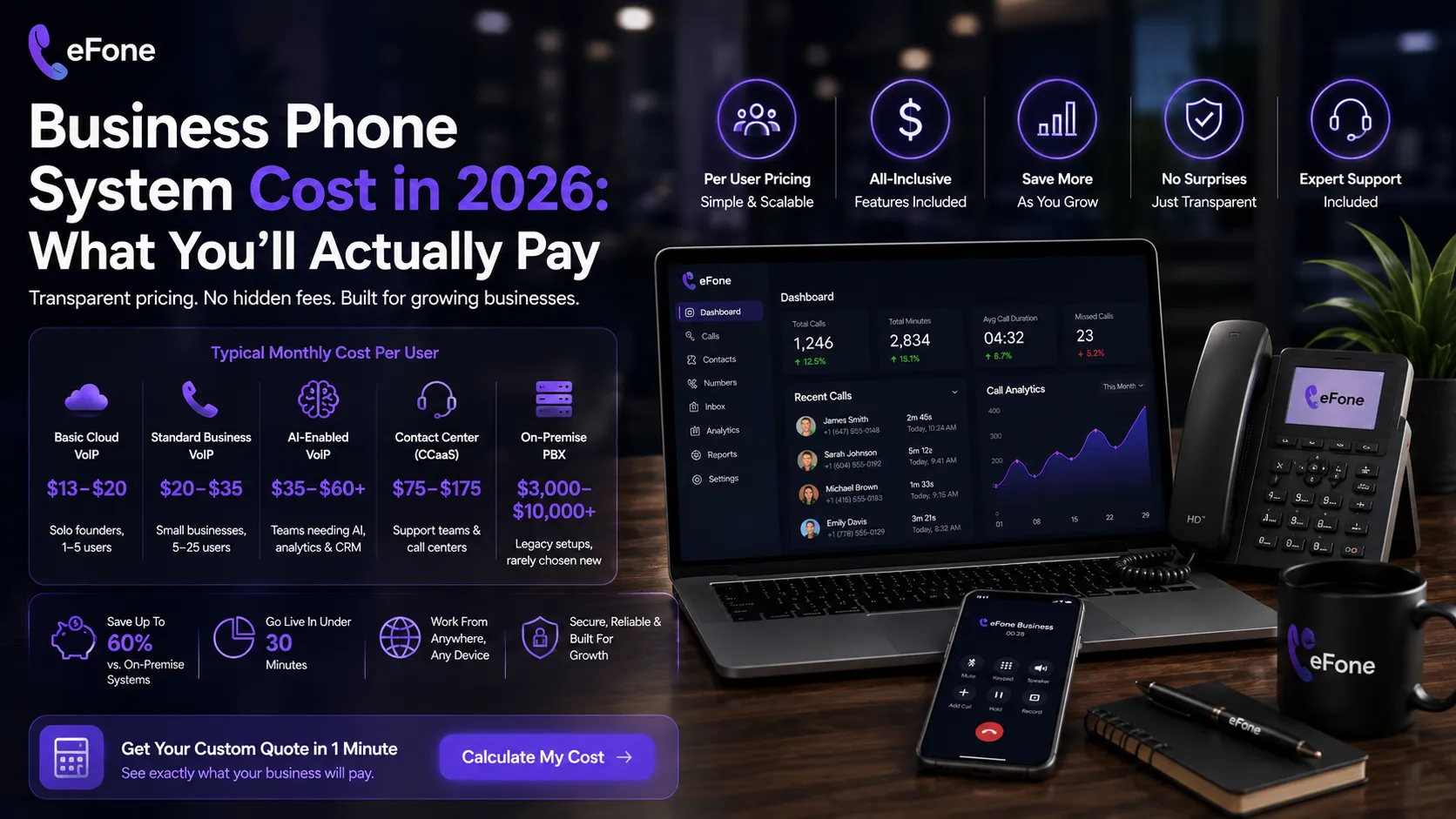
Landline providers generally charge a flat rate per line, which sounds simple, until you add long-distance charges, per-minute international rates, and equipment maintenance contracts. VoIP providers instead bundle nationwide (and often international) calling into a predictable per-user monthly subscription. For a 20-user business, that typically works out to $300 to $800 a month on VoIP versus a landline bill that climbs quickly once usage-based charges are added in.
Hidden Costs on Both Sides
Neither system is entirely free of surprises. Here is what to check for before you commit:
- VoIP: taxes and regulatory fees (often 15-25% on top of the base rate), number porting fees, and paid add-ons for premium features
- Landline: per-minute long-distance and international charges, maintenance contracts on PBX hardware, and per-line activation fees when you expand
Ask any provider, VoIP or landline, for an all-in quote that includes taxes, fees, and the exact features you need, rather than comparing advertised base rates alone.
Real-World Example: A 10-Person Team Switches to VoIP
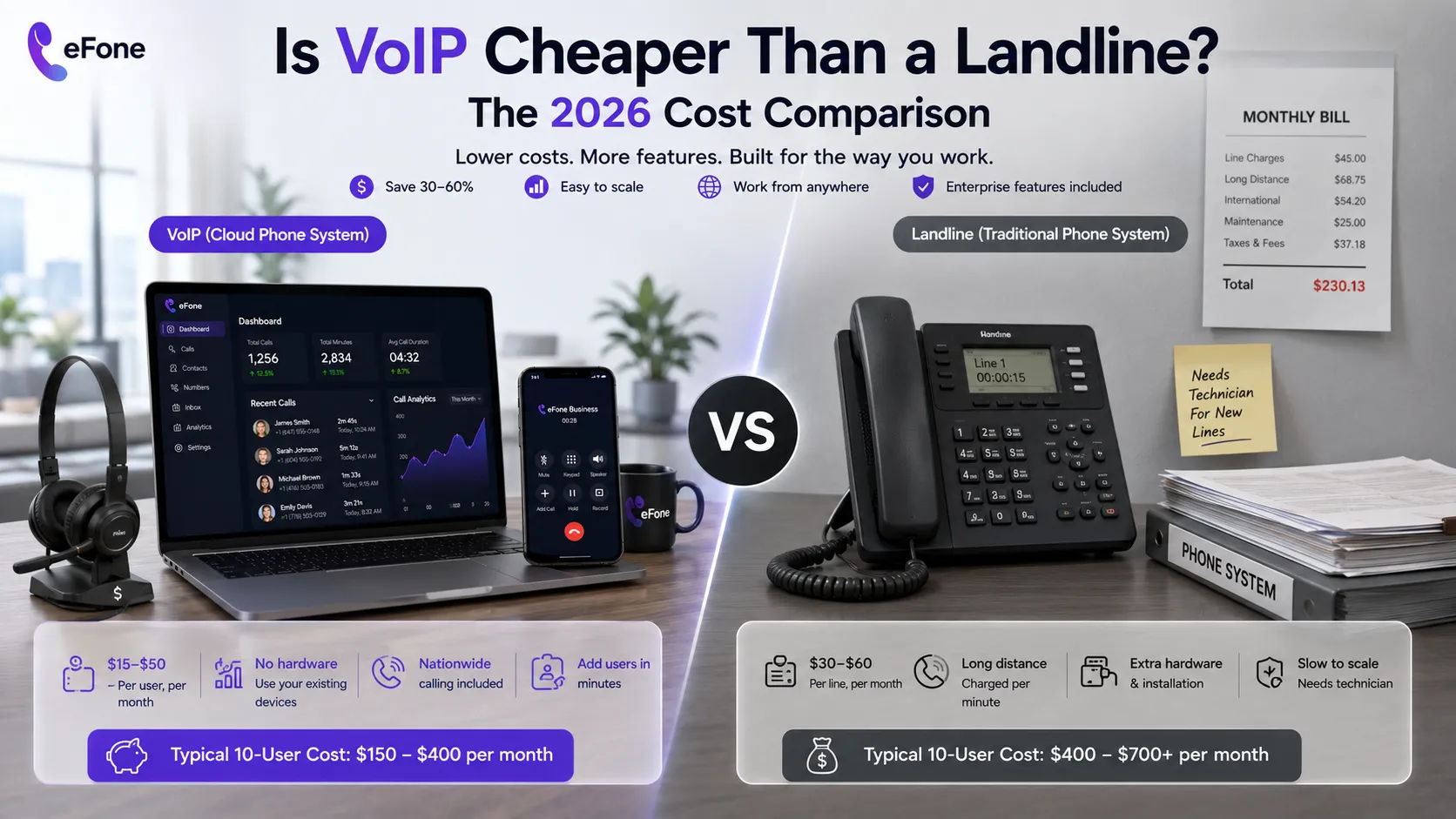
A small business with 10 employees moving from a traditional landline system to cloud VoIP typically sees costs shift like this:
| Before (Landline) | After (VoIP) | |
|---|---|---|
| Setup cost | $5,000+ (wiring, PBX hardware) | $0-$500 (optional hardware only) |
| Monthly cost | $400-$700 (with long-distance usage) | $150-$400 (nationwide calling included) |
| Added features | Extra hardware or third-party tools | Included: auto-attendant, voicemail-to-email, mobile app |
Across a 12-month period, this is a difference of several thousand dollars, money that typically goes straight back into growing the team instead of maintaining phone infrastructure.
When a Landline Might Still Make Sense
VoIP is not the right fit for every situation. A landline can still be worth keeping if:
- Your location has unreliable or low-bandwidth internet service
- You operate in an industry requiring dedicated analog lines for compliance or legacy equipment (e.g., certain alarm or fax systems)
- You want a backup line for power outages, since traditional landlines can stay powered independently of your building's electricity
For most everyday business communication, though, these are edge cases rather than the norm, and many businesses address them with a hybrid setup rather than staying on landline entirely.
Making the Switch: What to Expect
Migrating from landline to VoIP is generally faster and simpler than people expect:
- Port your existing business number(s), most providers handle this as part of onboarding
- Test call quality on your current internet connection before fully cutting over
- Train your team on the new softphone app or desk phones
- Keep a short overlap period with your old system if your contract allows, as a safety net
Where eFone Fits In
eFone's cloud VoIP plans bundle nationwide calling, auto-attendant, voicemail-to-email, and team messaging into transparent per-user pricing, no separate hardware purchase required to get started. If you are comparing your current landline bill against a cloud alternative, you can see exact plan pricing on the pricing page.
For a deeper breakdown of what a cloud system costs by team size, see our guide to business phone system cost, or explore remote work communication tools if part of your team works outside the office.
Frequently Asked Questions
Is VoIP really cheaper than a landline for a small business?+
Yes. Most businesses save 30 to 60% on monthly communication costs by switching from a landline to VoIP, once setup, hardware, and long-distance charges are factored in.
How much can a business save by switching to VoIP?+
Savings vary by size and usage, but a 10-person team commonly saves several thousand dollars in the first year alone, mainly from lower setup costs and bundled nationwide calling.
Are there hidden fees with VoIP pricing?+
Yes, watch for taxes and regulatory fees (often 15-25% on top of the base rate), number porting charges, and paid add-ons for premium features like call recording.
Do I need new hardware to switch to VoIP?+
Not necessarily. Most VoIP systems work through softphone apps on your existing laptops and smartphones. Desk phones are optional, typically $80 to $300 each.
Is call quality as good with VoIP as with a landline?+
With a stable broadband connection, VoIP call quality matches or exceeds landline in most cases. Call quality issues on VoIP are almost always tied to internet bandwidth, not the technology itself.
The Bottom Line
For nearly every modern business, VoIP is cheaper than landline, both in upfront setup and in what you pay every month. The exceptions are narrow: unreliable internet access or specific compliance needs for analog lines. For everyone else, switching typically pays for itself within the first few months. Compare eFone's VoIP plans on the pricing page to see what your team would save.
Ready to get your number?
Set up a business phone and help desk on one account, or grab a personal line to call home — usually in minutes.
Get started