VoIP Number Pakistan: Why Trust Beats Price
Most VoIP numbers drop calls when you need them most. See why trust matters more than price, and how eFone keeps Pakistan-to-US/Canada calls steady.
Let's be honest about something first.
If you searched "VoIP number" while sitting in Lahore, Karachi, or Islamabad, you're probably not looking for a textbook definition. You've already tried one or two cheap calling apps. You've had a call drop mid-sentence. You've heard the other person say "Hello? Hello? Can you hear me?" three times in a row before the line finally died.
So before we explain what a VoIP number technically is, let's talk about something more useful: why people don't trust them, and what actually separates a good one from a bad one.
Why VoIP Got a Bad Name in Pakistan
There's a real reason people here are skeptical of internet calling.
For years, the only "VoIP" most people knew was some random free app. It promised free international calls. It worked fine on day one. Then it started cutting out every few minutes. Calls to the US or Canada would connect. The voice would lag half a second behind. Eventually the line would just go dead, with no warning at all.
So when people say "VoIP is unreliable," they're not wrong about their experience. They're just describing bad providers, not the technology itself.
The internet calling part isn't the weak link. The provider behind it usually is.
This matters because the actual idea behind a VoIP number is simple. It's genuinely useful. Most people just never got to see that, because their only exposure was a shaky free app, not a properly built phone system.
So What Is a VoIP Number, Really?
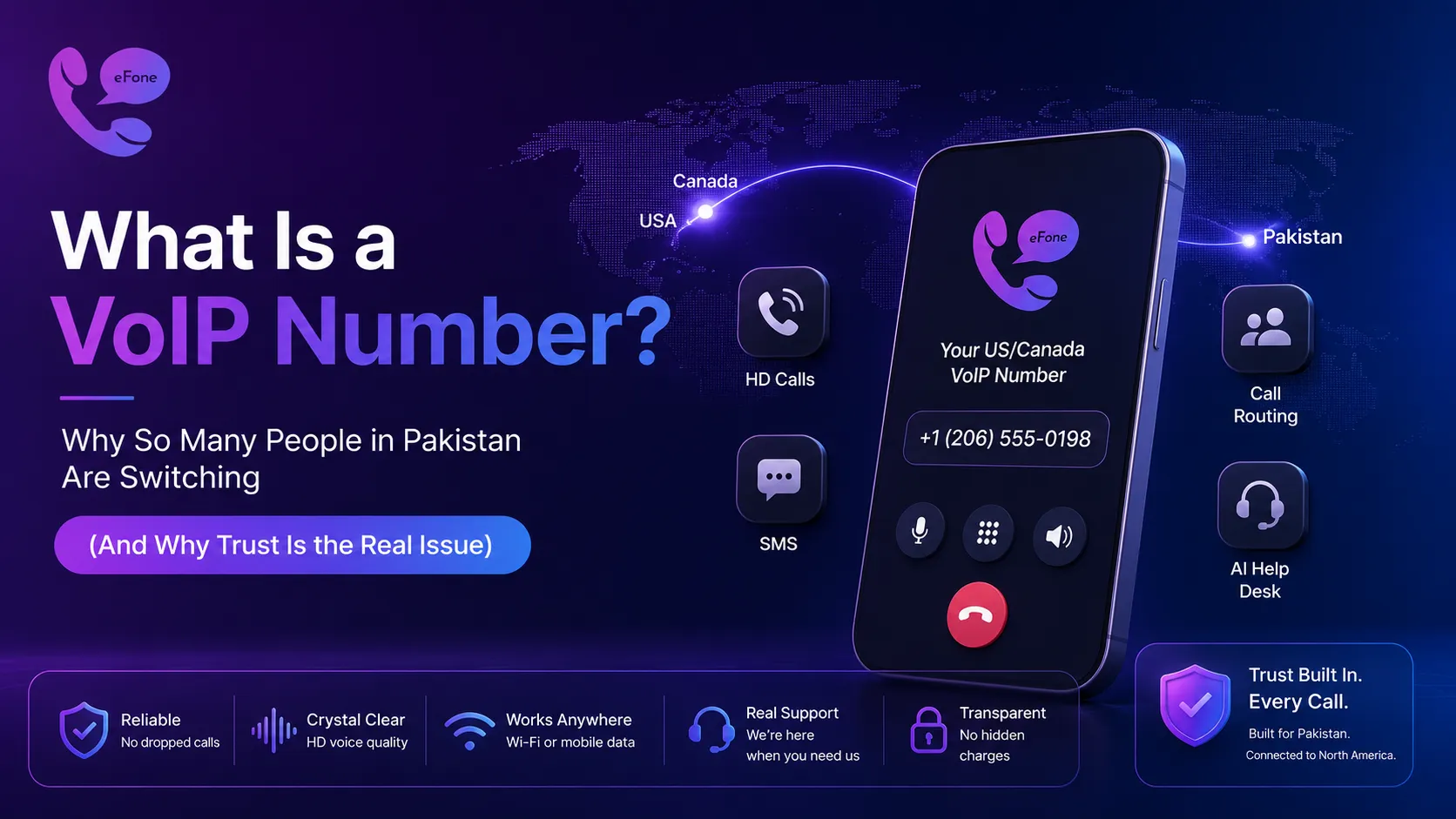
A VoIP number is a real phone number. It has an area code. People can call and text it normally. It shows up on caller ID like any other number.
The only difference is what happens behind the scenes. Instead of running through old copper telephone wires, it runs over the internet.
That's really the whole story. Your voice turns into data. That data travels over Wi-Fi or mobile data. On the other end, it turns back into sound. No physical line. No local phone exchange sitting in between.
But here's what people actually care about. Not the technical definition. They care whether the call stays connected. Whether the voice sounds clear. Whether they can trust it for something that matters, talking to your mother, closing a deal with a client in Toronto, or taking a support call for your business.
Why Trust Is the Whole Game With VoIP
Here's something most articles won't tell you plainly: the technology is basically the same everywhere. What's different is the network behind it. And that's exactly where most providers cut corners.
A cheap or free app routes your call through whatever server is cheapest at that moment. That's exactly why the quality is so inconsistent. One day it's fine. The next day it sounds like you're talking through a tin can. On a bad day, it just disconnects mid-sentence.
A properly run VoIP service does the opposite. It routes calls through stable, dedicated infrastructure. Call quality stops depending on luck.
That's the entire difference between "VoIP is unreliable" and "VoIP just works."
This is the exact gap eFone was built to close. People in Pakistan calling the US or Canada need a connection that doesn't make them nervous halfway through the call. Families abroad calling home need the same thing. eFone runs on a proper cloud phone network, not a patched-together free server. That's the real reason the connection holds up, call after call, instead of failing at random.
What Actually Makes a VoIP Number Worth Trusting
If you're choosing between providers, here's what separates the reliable ones from the ones that let you down right when it matters:
- The connection doesn't randomly drop. Sounds basic. It's still the biggest complaint people have. Test this first, before anything else.
- The voice sounds clear, not delayed or robotic. A half-second lag seems minor until you're mid-conversation and talking over each other.
- It holds up even on an average connection. A good provider doesn't fall apart the moment your signal dips. It stays steady.
- You can actually reach support if something breaks. Most free apps have no one to call when a connection fails. That tells you how seriously they take reliability.
- No surprise charges. Flat, predictable pricing. Not a vague "low rates" promise that turns into a confusing bill later.
Why eFone Specifically Works for This
Here's the part worth saying directly.
eFone was built around the exact problems people in Pakistan run into with international calling. Unreliable connections. Dropped calls. Apps that work fine in a demo and fall apart in real use.
eFone gives you a real US or Canada number. It works from your phone, your browser, or even a physical desk phone. Same number, every device. No juggling apps.
For people calling family or doing business between Pakistan and North America, that consistency is the whole point. You're not hoping the call holds up. It just does. The network behind it is built for that, not assembled out of whatever was cheapest.
For individuals, a number with incoming calls included is $9.99/month, with outbound calling and forwarding pay-as-you-go — or go unlimited US and Canada calling for a flat $10/month, E911 and regulatory fees included. If you're calling Pakistan directly from abroad, rates stay low there too. There are no contracts, so testing it costs you nothing.
For businesses, especially ones in Pakistan handling support or sales calls into the US and Canada, eFone also includes a full cloud phone system. Call routing, a team inbox, and a built-in AI help desk. Calls, texts, and support tickets all live in one place, instead of three apps that don't talk to each other.
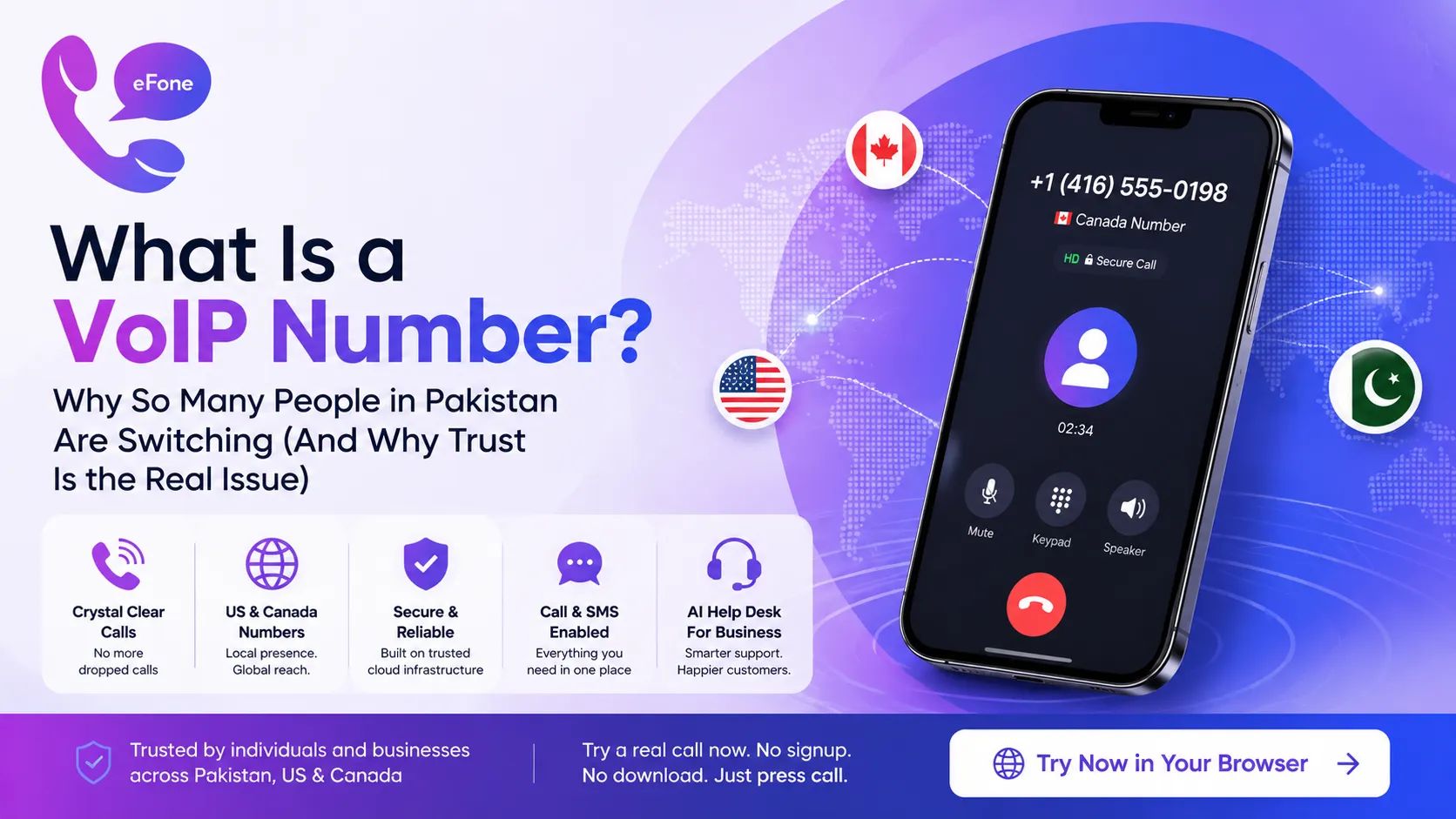
If a flaky calling app has burned you before, don't just take our word for it. Try a real call straight from your browser. No signup. No download. Just press call and listen.
FAQs About VoIP Numbers
Does a VoIP number work like a normal number for the person calling me?+
Yes. The person calling or texting you doesn't need an app or an account. It just rings, like any other call.
Will the person I'm calling know I'm using VoIP?+
No. It shows up on caller ID like a regular number. There's no indication it's internet-based on their end.
Can I keep my current number if I switch?+
In most cases, yes. This is called number porting. Your provider moves your existing number over, so your contacts don't need a new one.
Do I need any special equipment?+
No. A VoIP number works through an app, a browser, or a basic desk phone. No technician visit required.
Is the call quality actually good, or just "good enough"?+
With a stable provider and a decent internet connection, it's genuinely good. HD voice quality is normal now, not the exception.
Why do some VoIP apps still feel unreliable?+
Because they're often free or low-cost apps running on cheap, shared servers. The technology isn't the problem. The infrastructure behind it is.
Can I use a VoIP number to call Pakistan from abroad?+
Yes. Most VoIP providers, including eFone, offer low per-minute rates to Pakistan, which makes it a practical option for staying in touch with family.
Is it worth it for a small business in Pakistan?+
Yes, especially if you're handling calls or support for customers in the US or Canada. It's usually far cheaper than a traditional setup, and it scales easily as your team grows.
Conclusion
A VoIP number isn't complicated. It's just a real phone number that runs over the internet instead of old phone lines.
The technology itself isn't the issue. It never was. The real issue has always been which provider is behind it, and whether that provider actually invested in a stable network or just stitched together the cheapest option available.
That's the whole reason trust matters more than features here. A number that drops calls or lags mid-sentence isn't saving you money. It's costing you the conversation.
eFone was built to be the provider that doesn't make you nervous halfway through a call. One number, every device, no contracts, and a network built to actually hold up, whether you're calling family back home or running a business across two countries.
If you've been let down by a calling app before, the fair move is to test this one before deciding anything. Try a real call right now, no signup needed, and judge for yourself.
Ready to get your number?
Set up a business phone and help desk on one account, or grab a personal line to call home — usually in minutes.
Get started